Knowing when to replace walking shoes is not as simple as checking the date on the receipt. A pair used for occasional errands and a pair worn through long working days can look quite different after the same number of months.
The better starting point is to examine the footwear, notice changes in fit and decide whether a repair question or a replacement fitting is needed. If you wear orthotics, bring them into that conversation as well.
This guide from Custom Orthopedic & The Walk Shoppe in Edmonton offers five practical checks, examples of what to report and questions to ask before choosing another pair. It is a footwear review, not a way to diagnose the cause of pain from a photograph of a sole.
Start With the Job the Shoes Actually Do
Write down how you use the pair now. Everyday walking, standing at work, occasional shopping and indoor use place different practical demands on footwear. A description of an ordinary week gives the fitter useful context.
Include the surfaces, socks and orthotics involved. Mention whether you alternate between several pairs or wear the same shoes for almost everything. The purchase date is still useful information, but it cannot describe that whole pattern.
Think about what changed before you started questioning the shoes. Did the fastening become harder to secure? Did you begin wearing thicker socks? Did you transfer your inserts from another pair?
Our shoe-width and depth guide explains why a change in internal space can matter even when the size label has stayed the same.
Check 1: Examine the Outsole and Heel
Clean off loose dirt so you can see the underside, then compare both shoes. Look for worn areas, damage or a change in how the shoe sits when placed on a level surface.
The Royal National Orthopaedic Hospital’s footwear-care guide recommends regularly examining soles and heels for wear and having excessive wear inspected. Its service arrangements are specific to that hospital, but the inspection principle is useful background.
Do not assign yourself a diagnosis from a wear pattern. A photograph can help document what you noticed, yet it cannot show the entire relationship between your foot, the shoe and your walking.
Ask whether the condition calls for a repair assessment or replacement. If you are unsure about traction or structural damage, avoid relying on the pair for a demanding outing while you arrange advice.
Check 2: Inspect the Upper, Seams and Fastening
Review the parts that hold the shoe around your foot. Notice loose stitching, damaged closures, torn material or a heel area that no longer feels secure.
Explain what happens when you fasten the shoe. If you now need a different lacing arrangement to keep it on, show the fitter rather than assuming that tightening harder solves the problem.
Compare the left and right sides without expecting them to look identical. The useful question is whether the pair still fits and functions appropriately, not whether the wear is perfectly symmetrical.
Check inside as well, following any instructions for removable liners. A folded lining, debris or a damaged edge may help explain why the shoe feels different. Keep any detached piece for the person inspecting the footwear.
Check 3: Notice Changes in the Complete Fit
Try both shoes with the socks and inserts you actually use. Stand and walk where you can safely notice the fit rather than deciding from the appearance of the empty pair.
Describe the location of any pressure or movement. Is the toe area crowded? Does the heel lift? Is the top difficult to close? Those observations can point the fitting conversation toward different dimensions.
The AAOS guide to finding the right shoe fit emphasizes evaluating the actual fit instead of relying on a size label. Your next pair may need a different shape, width or depth rather than a longer size.
If your feet have changed or a healthcare professional has given you new footwear advice, mention it. A worn shoe and a changed fitting requirement are separate reasons to review the arrangement.
Check 4: Review the Shoe and Orthotic Together
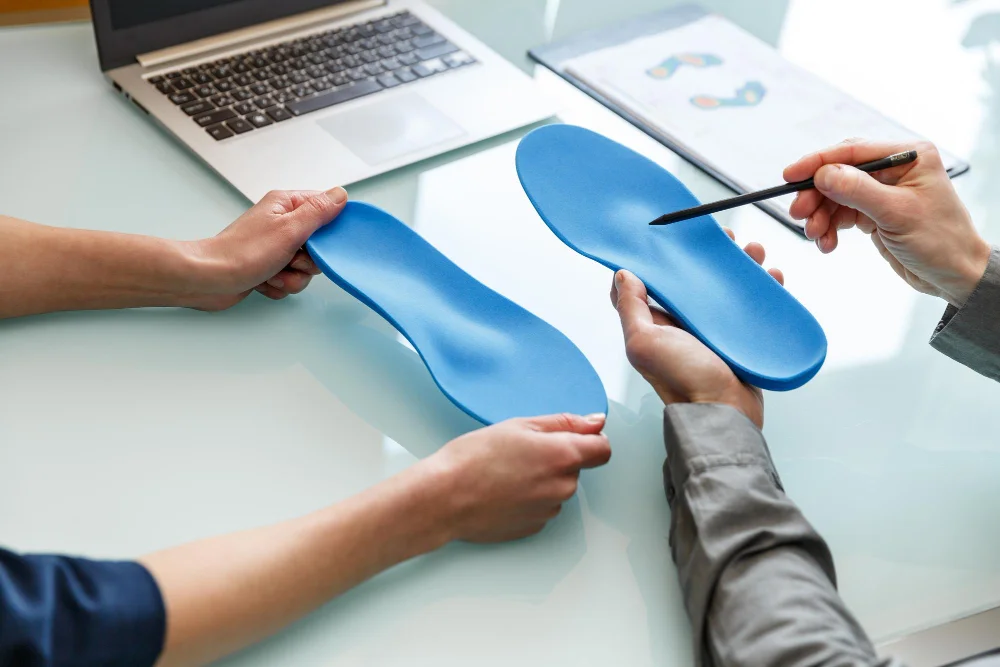
A concern about one part should not automatically trigger replacement of the other. Established orthotics may need different footwear, while a shoe that still looks tidy may be unsuitable for the current device.
Bring both inserts to the fitting and demonstrate their normal placement. Ask which factory liner should remain and whether the devices sit as intended. Do not alter them to force compatibility.
Our guide to orthotic wear, adjustment and replacement explains why a worn cover does not always mean the whole device needs replacing. Keep that decision distinct from the condition of the shoes.
For example, if discomfort appears only after transferring inserts into an older pair, bring that pair and a comfortable alternative. Showing the difference is more useful than replacing everything before anyone has inspected it.
Check 5: Consider Whether the Purpose Has Changed
A shoe that suited an occasional outing may no longer match your routine after a change in job, activity or season. This can be a suitability question even before visible damage becomes obvious.
List the new requirement clearly. Perhaps you now walk between offices, need different workplace footwear or want a dedicated indoor pair while keeping outdoor shoes by the door.
Read our indoor footwear guide if home use is part of the change. For a work environment with specific requirements, bring the rules to the fitting rather than relying on a generic walking-shoe recommendation.
Explain which feature of the old pair you hope to keep. A successful replacement should account for what worked as well as what needs to change.
Repair or Replace? Ask What the Work Would Address
Some concerns are worth taking to a footwear professional for a repair assessment. Others may make replacement more practical. The answer depends on the specific construction, damage and intended use.
Ask what a proposed repair would change and what limitations would remain. Does it address the concern you brought in, or would you still have an unresolved fitting problem afterward?
Request a cost and timing estimate before authorizing work. Ask whether you need to leave the pair and what footwear is appropriate while it is unavailable. Do not assume every model or material can be repaired in the same way.
Also ask whether a repaired shoe should be checked again with your orthotics. Changing part of the footwear and confirming the complete fit are related tasks, but they are not interchangeable.
A Practical Example: A Comfortable Pair With a Damaged Closure
Imagine that the shoe still feels comfortable but one closure no longer stays fastened. Explain that the concern is securing the shoe, not a wish for additional cushioning or a different size.
Bring the pair for inspection and ask whether the closure can be repaired appropriately. The answer should reflect the actual construction and the condition of the rest of the shoe.
If repair is unsuitable, take note of the model, size and width that previously worked. Those details help guide comparisons without guaranteeing that another pair, even from the same brand, will fit identically.
This example illustrates why describing a specific problem matters. Buying a roomier shoe would not, by itself, answer a question about a damaged fastening.
A Second Example: New Pressure in an Older Pair
Suppose you notice pressure across the top after changing to winter socks. Bring both the usual socks and the thicker pair to the appointment, together with any orthotics.
Ask the fitter to compare the complete arrangements. The observation may lead to a discussion about available room, the closure, another shoe or a different practical setup. It does not prove the current orthotic has failed.
Record whether the pressure begins immediately or after wear. Describe visible marks or skin changes and seek advice rather than repeating an uncomfortable trial to collect more evidence.
A clear account of what changed can prevent an unnecessary purchase based on an assumption. It also helps identify questions that need a healthcare assessment rather than another footwear comparison.
Prepare for a Replacement Fitting
Bring the worn shoes even if you are certain you want to replace them. They show the fitter what you used and give you a concrete way to explain the concern.
Include your normal socks, orthotics and any comfortable alternative. Tell the fitter which activities the new pair should handle and whether you have workplace or medical footwear requirements.
Compare models one change at a time when possible. A different width in one model and a completely different shape in another can feel different for separate reasons. Ask what the comparison shows.
Our footwear brands and fitting page explains our approach to in-person selection. The objective is a suitable fit, not simply buying the newest version of the old shoe.
Check the Return Policy Before the First Trial
Ask about the actual return or exchange conditions, including whether an indoor trial is allowed. Keep the receipt and packaging while you assess the new pair within those conditions.
Choose a trial when you can stop and change shoes. A full day away from home makes it harder to respond to a problem and may affect the condition of the footwear.
If the orthotics are also new, follow the separate introduction plan you were given. Our guide to the first weeks with orthotics explains questions to clarify before increasing wear.
Do not assume that an initially tight shoe should be endured until it stretches. Raise a fitting concern with the retailer or provider instead of treating discomfort as the price of a new pair.

Make Winter Safety a Separate Check
In Edmonton, an everyday shoe may also be used between a vehicle and a building during winter. Consider that part of the route when deciding which footwear to use outdoors.
MyHealth Alberta’s winter-walking guidance discusses fit, grip and precautions on icy surfaces. No replacement shoe makes ice harmless, and outdoor traction devices may need to be removed before entering a building.
Our winter-boot fitting guide offers a related footwear discussion. Plan where you will change pairs and avoid making the change while balancing on steps or carrying too much.
Keep the Useful Details After Shopping
Once you have selected a replacement, record the model, size, width and the inserts used during the fitting. Keep the care instructions with the receipt. A brief record helps when you return with a question or compare another pair later.
Also note why you replaced the previous shoes. A damaged closure, a change in fit and a different activity requirement are useful distinctions. Remembering the actual reason can prevent the next purchase from becoming a vague search for more support.
If you retain the older pair, ask whether it is appropriate for any intended use. Moving a questionable shoe from outdoor walking to indoor wear does not automatically resolve a fitting or structural problem. Explain the proposed role before assuming it can become a safe backup.
The purpose of keeping records is practical: make future conversations clearer, preserve useful information and avoid relying on an old size label as the only evidence.
Common Questions About Replacing Walking Shoes
Is There a Fixed Replacement Deadline?
A single date does not describe every person’s use or every shoe’s condition. Follow relevant manufacturer and professional advice, and arrange a review when wear, damage or a fitting change raises a concern.
Should I Copy the Size of My Old Pair?
Use it as a reference, then have the new footwear assessed. Sizes and shapes vary between models, and the intended socks and orthotics should be included in the fitting.
Can a Wear Pattern Diagnose My Walking?
It can be an observation to discuss, but it is not a diagnosis on its own. A proper assessment considers your symptoms, feet, footwear, activities and movement together.
Review Your Walking Footwear in Edmonton
Custom Orthopedic & The Walk Shoppe can discuss your footwear concerns and assess the shoes and inserts you bring. Visit 10536 102 Avenue NW, Edmonton, call 780-426-3338, or contact us to ask about a fitting.
Knowing when to replace walking shoes starts with understanding what has changed. Bring the evidence, describe the purpose and ask which option addresses the actual problem.
This article provides general footwear information and does not replace medical assessment of new pain, skin damage or changes in walking.