Living in Edmonton, we don’t just “experience” winter—we survive it. Whether you are commuting downtown, walking the dog in the River Valley, or just trying to navigate an icy parking lot without taking a spill, the season demands respect.
But for your feet, winter is more than just cold; it is a biomechanical challenge. The combination of heavy boots, uneven icy terrain, and the freezing cold can wreak havoc on your lower limbs. At Custom Orthopedic, we see a spike in specific foot issues every year once the snow falls.
In this comprehensive guide, we will break down exactly how to protect your feet this season, from finding the elusive “orthotic-friendly” winter boot to understanding why your joints hurt more when the temperature drops.
The Unique Biomechanics of Winter Walking
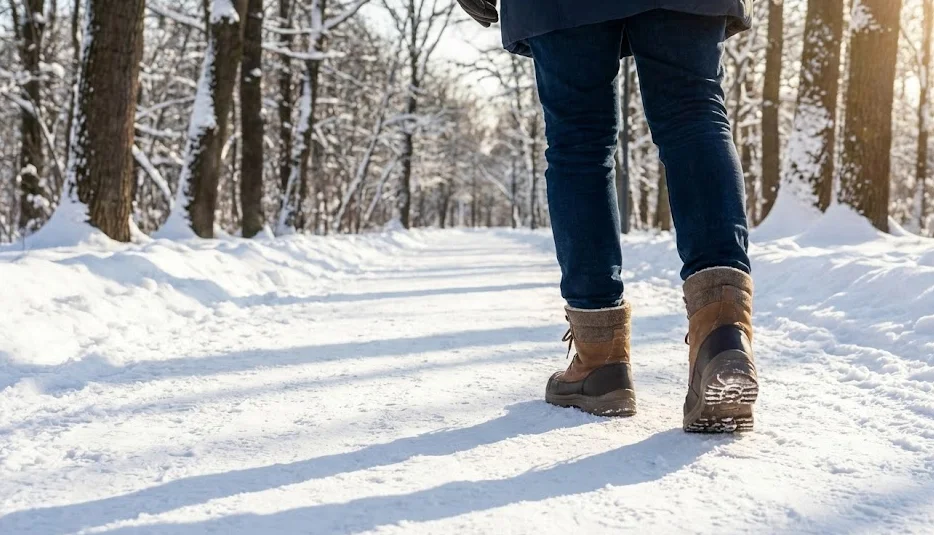
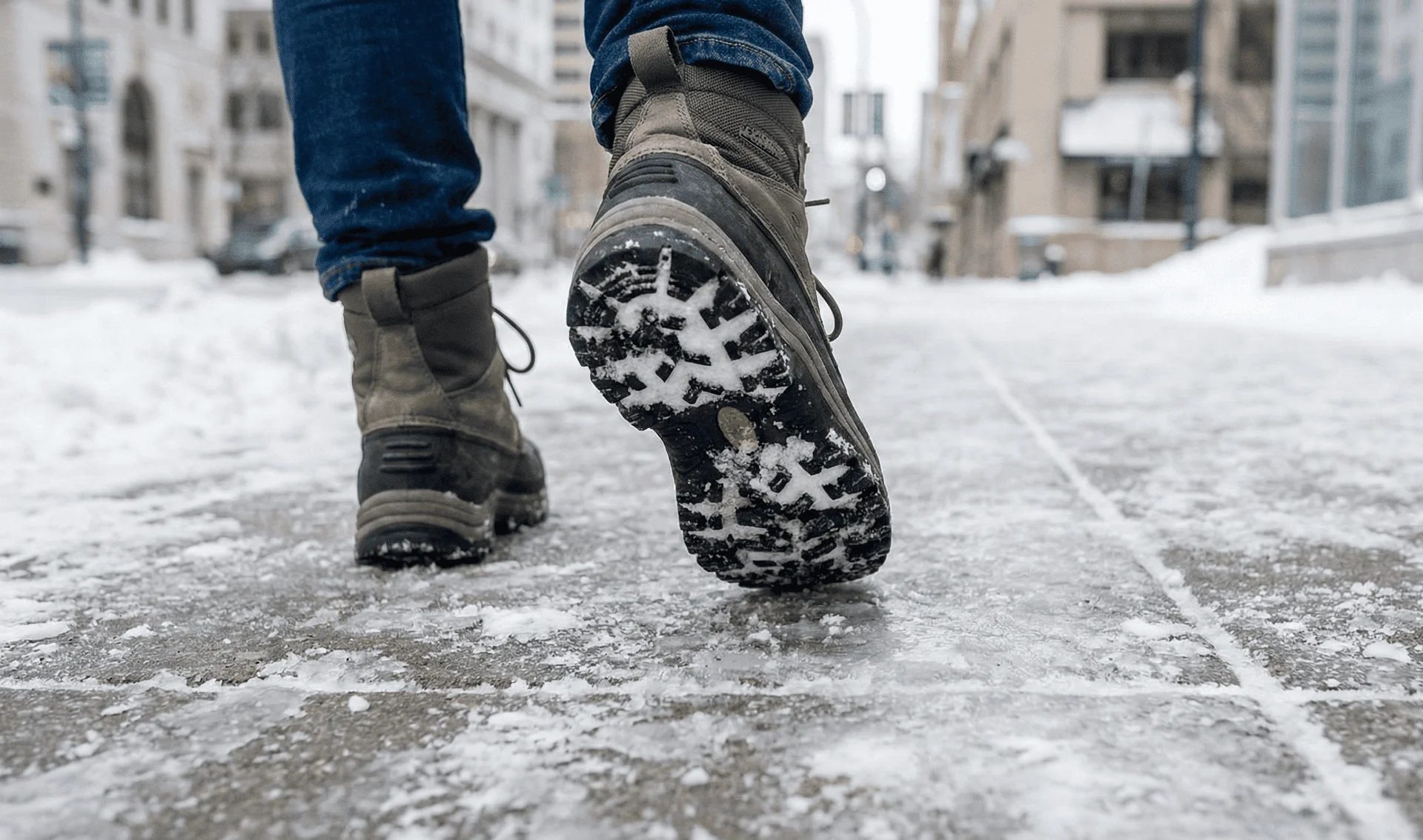
Have you ever noticed that you walk differently when there is snow on the ground? You aren’t imagining it. Your body naturally adjusts its gait to maintain balance on slippery surfaces, often adopting a “shuffle” rather than a full stride.
When you walk on dry pavement, your gait cycle is fluid: heel strike, mid-stance, and toe-off. On ice, however, you unconsciously tense your stabilizer muscles. You shorten your stride to keep your center of gravity directly over your feet. While this is a smart safety mechanism (often called the “Penguin Walk”), it puts significantly more strain on your shins, ankles, and arches.
This tension can lead to fatigue and overuse injuries. If you are already dealing with conditions like Plantar Fasciitis, the added strain of gripping your toes inside your boots to stay upright can aggravate that morning heel pain.
The “Volume” Problem
Another challenge is the footwear itself. Winter boots are heavy. The average winter boot is significantly heavier than a running shoe, which increases the energy cost of walking. If you have hip or knee issues, that extra weight at the end of the lever (your leg) acts like an ankle weight, potentially increasing joint pain after a long day.
Anatomy of a Perfect Winter Boot
One of the most frequent questions we get at our Edmonton clinic is, “Which winter boots will fit my custom orthotics?”
It is a frustrating shopping experience. You find a warm boot, but once you pull out the liner and shove your orthotic in, your foot is crushed against the top of the boot. To save you time, here is exactly what you need to look for:
1. Removable Liners are Non-Negotiable
Many fashion-forward winter boots have glued-in insoles. These are a nightmare for orthotic users. You must look for boots with removable footbeds. When you remove the manufacturer’s liner, you create the necessary “volume” or depth for your custom device.
2. The Shank and Heel Counter
Just because it’s a boot doesn’t mean it’s stable. Test the boot just like you would a shoe:
- The Squeeze Test: Squeeze the heel cup. It should be rigid, not soft. If you can collapse the heel with your thumb, it won’t support your ankle on uneven ice.
- The Twist Test: Try to wring the boot out like a dishrag. A good winter boot should resist twisting. This rigidity protects your arch when you step on a hard chunk of ice or a hidden rut in the snow.
3. Adjustable Fastenings
Slip-on boots (like classic UGGs or mukluks) are cozy, but they offer zero ankle support. For winter stability, laces are superior. They allow you to lock your heel into the back of the boot, preventing your foot from sliding forward and jamming your toes—a common cause of “winter toe” (black toenails).
4. Traction Ratings (The Snowflake Factor)
Not all rubber soles are created equal. Some rubber compounds harden in extreme cold (below -20°C), turning your boots into hard plastic skates. We highly recommend checking the Rate My Treads database. This is a project by the KITE Research Institute (University Health Network) that tests boots on actual ice. They rate boots with “Snowflakes” based on their traction.
- External Resource: Check your boot’s safety rating at Rate My Treads.
Fitting Your Orthotics into Winter Gear
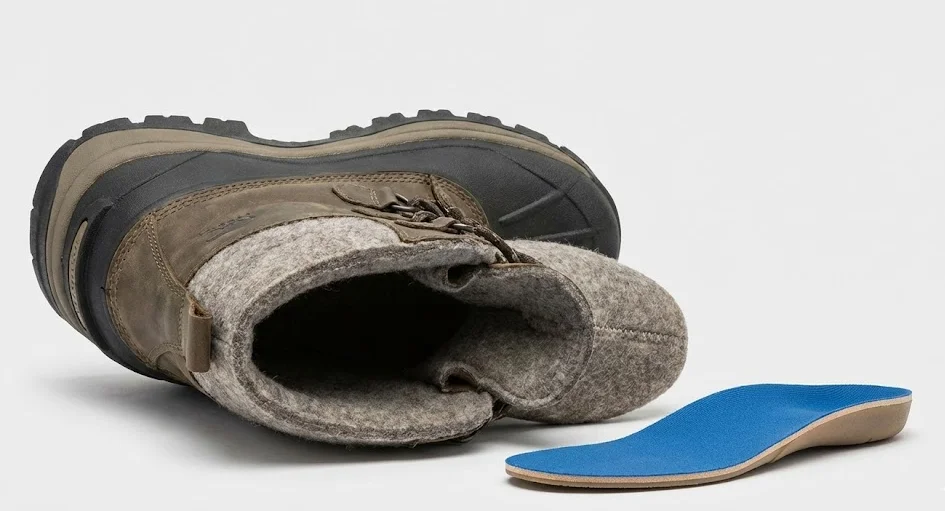
If you wear Custom Orthotics, you know the struggle of fitting them into different footwear. Winter boots often have a lot of fuzzy lining that takes up space.
Pro-Tip: When you come in for a fitting or adjustment, bring your winter boots with you. Sometimes, we can create a “winter-specific” top cover for your orthotics that is more durable and less likely to get chewed up by the rough interior of a boot.
If your boots are simply too tight with your full orthotics, do not force them. Constricting your feet cuts off circulation, which is the last thing you want in -30°C weather. Poor circulation leads to cold feet much faster than thin insulation does. If you cannot wiggle your toes, the boot is too tight.
Cold-Induced Foot Pain: It’s Not Just in Your Head
Does your arthritis flare up when a cold front hits Edmonton? You are not alone. Drops in barometric pressure can cause tissues to expand, putting pressure on sensitive nerves and joints.
Raynaud’s Phenomenon
For some, the cold triggers a more visible reaction called Raynaud’s Phenomenon. This causes the blood vessels in your toes to spasm and constrict excessively, turning your toes white, then blue, and finally red as they warm up. It can be incredibly painful.
- External Resource: Learn more about managing Raynaud’s from MyHealth Alberta.
If you suffer from Raynaud’s or general poor circulation (common in our diabetic patients), keeping your feet warm is a medical necessity, not just a comfort preference.
Strategies for Warmth:
- Merino Wool over Cotton: Cotton creates a “sweat bath” for your feet. When you sweat in a heavy boot, cotton absorbs the moisture and holds it against your skin. As soon as you stop moving, that sweat cools down and freezes your feet. Merino wool wicks moisture away, keeping you dry and warm.
- Thermal Insoles: If you don’t wear custom orthotics, look for insoles with a thermal reflective layer (often made of mylar or wool).
- Room to Move: As mentioned earlier, air is an insulator. If your boots are too tight, you squeeze out the warm air pockets. Buy your winter boots half a size larger if you plan to wear thick socks.
Safety First: Preventing Winter Falls
Falls are the leading cause of injury-related hospitalizations for seniors in Canada, but they happen to everyone. An icy sidewalk can result in a severe ankle sprain or fracture in a split second.
The “Penguin Walk” Technique:
- Keep your knees loose and slightly bent.
- Point your toes slightly outward.
- Lean slightly forward so your center of gravity is over your front leg.
- Take short, flat-footed steps.
- External Resource: See the official Penguin Walk tips from Alberta Health Services.
Strengthening for Stability
You can “winter-proof” your body by strengthening the stabilizer muscles around your ankles. Exercises like single-leg balances (while brushing your teeth) or calf raises can improve your proprioception—your body’s ability to sense its position in space. This split-second reaction time is what saves you when you hit a patch of black ice.
When to See a Professional Canadian Certified Pedorthist
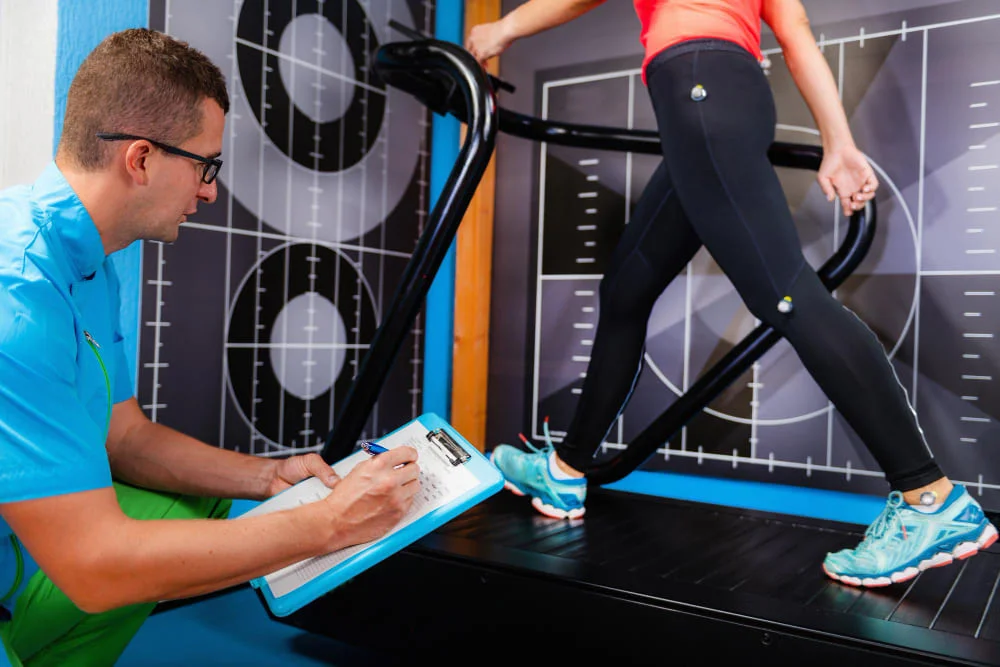
If you find that your feet are aching significantly more during the winter months, or if you feel unstable and unsafe while walking, it might be time for an assessment.
Sometimes, the issue isn’t the boot—it’s the foot inside it. A biomechanical exam can determine if your arches are collapsing under the weight of winter gear or if you need additional support to navigate icy terrain safely.
We also offer Compression Therapy which can be a game-changer for winter swelling. Surprisingly, people often experience swelling in winter due to the heavy boots and less movement throughout the day.
Don’t let the Edmonton winter keep you indoors. With the right boots, the right insoles, and a little bit of preparation, you can keep walking comfortably until the spring thaw finally arrives.
Need help fitting your orthotics into your winter boots? Stop by our Edmonton clinic. Contact Custom Orthopedic Today