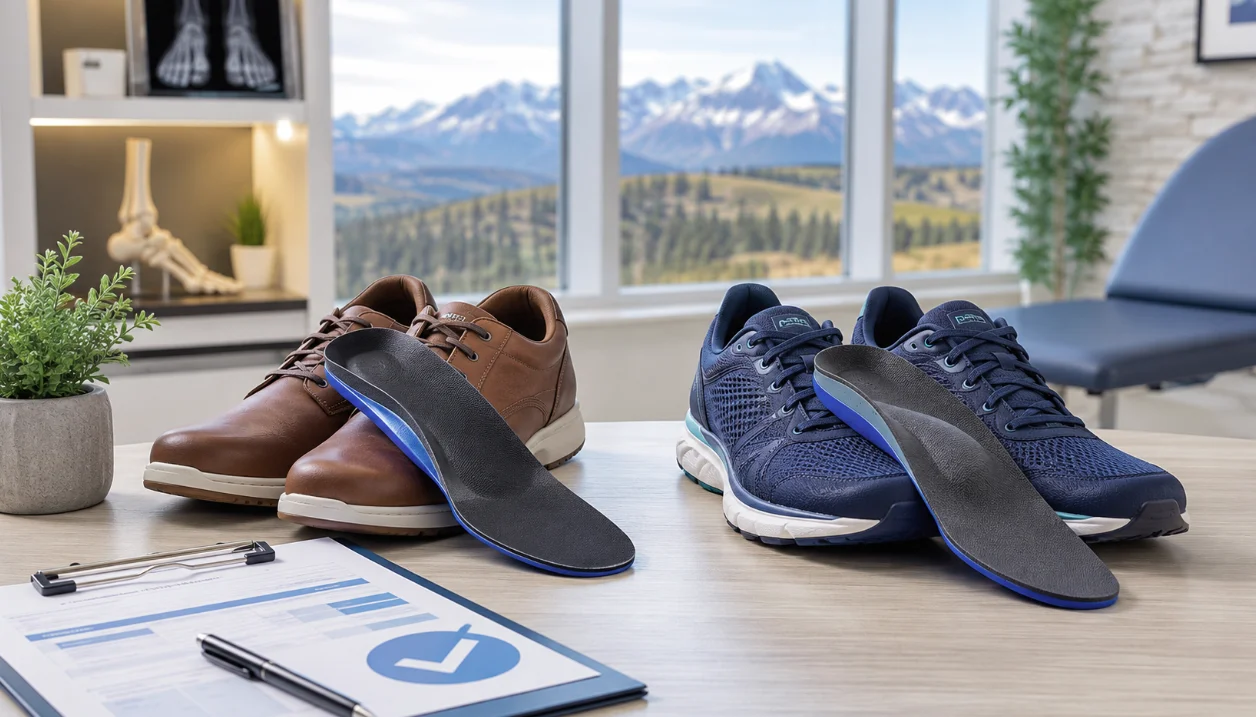
If you are suffering from chronic foot, knee, or lower back pain, custom orthotics are often the closest thing to a magic bullet. They realign your kinetic chain, absorb the shock of hard concrete floors, and provide the exact structural support your unique feet require.
But let’s address the elephant in the room: custom medical devices are an investment. Figuring out how to pay for them by navigating the maze of extended health benefits, prescriptions, and government programs can be a headache.
Furthermore, once people finally get their orthotics, they run into a secondary, highly annoying problem: the daily shoe swap. Pulling your orthotics out of your heavy work boots, jamming them into your narrow running shoes, and transferring them to your casual weekend shoes is a frustrating chore.
In this comprehensive guide, we are going to demystify custom orthotics insurance coverage in Alberta. More importantly, we are going to share the ultimate insider tip: how to structure your insurance claims and clinic visits so you can secure a “two-pair” lifestyle, eliminating the hassle of swapping your insoles forever.
The Ultimate Hack: The “Two-Pair” Strategy
Before we dive into the paperwork, let’s talk about the biggest mistake first-time orthotics wearers make: assuming one pair of orthotics will fit perfectly into every shoe they own.
The reality is that your bulky steel-toed boots have a completely different interior volume than your low-profile running shoes or your dress shoes. A thick, highly cushioned orthotic designed for a work boot will physically not fit into a dress shoe. Conversely, a thin dress orthotic will slide around uselessly inside a wide hiking boot.
Why You Need Two Pairs
- Zero Hassle: You don’t have to remember to switch them. Your work orthotics stay in your work boots; your athletic orthotics stay in your gym shoes.
- Proper Fit: Each orthotic is engineered specifically for the shoe it lives in, maximizing the biomechanical correction.
- Increased Lifespan: Yanking an orthotic in and out of tight shoes bends the materials and frays the top covers. Leaving them in place doubles their lifespan.
- Hygiene: Work boots and gym shoes get sweaty. Rotating between two pairs of shoes (each with their own orthotics) allows the materials to fully dry out, preventing bacteria and odor.
How to Get Two Pairs Covered
Many patients don’t realize that their insurance policies might actually support getting multiple pairs! Here is how you do it:
- Check Your Dollar Maximum: Some Alberta insurance plans cover 80% to 100% up to a high maximum (e.g., $800 to $1000 per year). If your plan has a high limit, you can easily claim two pairs in a single year.
- The “Dual Prescription” Method: When you visit your doctor, explain that you have two vastly different daily activities (e.g., working 10 hours on a construction site, and marathon training on the weekends). Ask your doctor to write the prescription for two pairs with specific use cases (e.g., “One pair Custom Foot Orthotics for work boots, One pair for athletic footwear”).
- Utilize Your Health Spending Account (HSA): If your core benefits only cover one pair (e.g., a strict $400 limit), use your core benefits for Pair 1, and use your employer-provided HSA to fully cover Pair 2.
- Clinic “Subscription” or Package Rates: Many clinics (including Custom Orthopedic) offer significant discounts on a second pair if ordered at the same time, because we only have to take your 3D foot scan once. You pay full price for the first, get a discount on the second, and submit both receipts to maximize your coverage.
Step 1: Decoding Your Alberta Health Benefits
To pull off the two-pair strategy—or even just to get your first pair covered smoothly—you must understand the fine print of your policy. Do not guess! Log into your provider’s app (Alberta Blue Cross, Sun Life, Canada Life, Manulife, etc.) or call them directly.
Here are the critical questions you must answer before booking an appointment:
What is your exact coverage limit?
Look for two numbers: the percentage covered (e.g., 80%) and the maximum dollar amount (e.g., $500). If your orthotics cost $450 and you have 80% coverage, insurance will pay $360, and you will pay $90 out of pocket.
What is the frequency limit?
This is where people get caught off guard. Some plans say “$500 per calendar year,” meaning your benefits reset on January 1st. Other plans say “$500 every 24 rolling months.” If you bought a pair on June 15, 2024, you cannot claim another pair until June 16, 2026.
Who is allowed to prescribe them?
Your insurance company dictates who can write the doctor’s note. While almost all accept a Medical Doctor (MD), some will also accept prescriptions from Podiatrists, Nurse Practitioners, or Chiropractors.
Who is allowed to dispense them?
Insurance companies have strict rules about who physically makes and hands you the orthotics. They require a recognized specialist (like a Certified Canadian Pedorthist or Orthotist). At Custom Orthopedic, our clinicians hold the exact credentials your insurance company demands.
For a quick reference on how we help you navigate this, visit our insurance information page.
Step 2: Securing the Perfect Doctor’s Note
You cannot simply walk into an orthotics clinic, buy a pair of custom insoles, and expect your insurance company to reimburse you. Custom orthotics are strictly regulated medical devices. To process your claim, your insurer requires a formal medical prescription.
The Anatomy of a Perfect Prescription
A generic note that just says “Needs orthotics” will be immediately rejected. Ask your prescribing doctor to ensure the following elements are clearly written on the pad:
- A Specific Medical Diagnosis: Why do you need them? Your doctor must state a recognized condition, such as plantar fasciitis, pes planus (flat feet), chondromalacia patella (runner’s knee), or Morton’s neuroma. If you are experiencing unexplained pain, read our guide on what your feet are telling you to help articulate your symptoms to your doctor.
- The Magic Words: The prescription must explicitly recommend “Custom-Made Foot Orthotics.”
- The Two-Pair Recommendation (If Applicable): If you are going for the two-pair strategy, have the doctor write “Requires two pairs for different footwear categories.”
- Physician Details: Ensure the doctor’s name, signature, date, and license number are legible.
Crucial Tip: Always get your prescription before you pay for your orthotics. Insurance companies strictly audit dates. If your orthotics are paid for on October 1st, but your doctor’s note is dated October 5th, your claim will be denied.
Step 3: The Biomechanical Assessment
Insurance companies want proof that they are paying for a genuinely custom medical device, not a $40 gel insert from the pharmacy. To satisfy their requirements, you must undergo a comprehensive, hands-on biomechanical assessment.
When you book an appointment at our Edmonton clinic, we do not just ask you to step on a computerized mat. We conduct a full clinical examination:
- Gait Analysis: We observe your stride to identify issues like overpronation or supination.
- Structural Testing: We test the range of motion in your ankles and knees and check for leg length discrepancies. If you have uneven legs, we highly recommend reading our 10 essential steps to manage leg length discrepancy with orthotics.
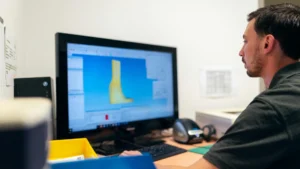
- 3D Volumetric Casting: This is the most important step for insurance purposes. We must take a 3D mold or digital scan of your foot in a neutral, non-weight-bearing position. This proves to your provider that the orthotic was built from scratch around your exact foot geometry.
Curious about the exact step-by-step process? Read our detailed breakdown of what happens during a custom orthotics fitting.
Step 4: Mastering the Paperwork and Filing Your Claim
Once your custom orthotics are manufactured in our lab and fitted perfectly to your shoes, it is time to get your money back.
Why Don’t Clinics Direct Bill for Orthotics?
This is the number one question we receive! While clinics can often direct bill for services like massage or physiotherapy, custom orthotics are treated differently by major insurers. Most private Canadian insurers (like Sun Life, Canada Life, and Manulife) require the patient to submit the orthotics claim directly. Because an orthotic is an expensive physical product, insurers want to verify that the patient has received and paid for the item before releasing the funds. Privacy laws also prevent us from accessing your private health spending details.
The “Claim Package” We Provide
While we cannot log into your banking app for you, we make the process virtually foolproof. When you pick up your orthotics, we provide a complete Insurance Claim Package containing everything your provider will ask for:
- Paid-in-Full Receipt: Detailing the cost and the exact date the devices were dispensed.
- Biomechanical Summary Letter: A formal document outlining your diagnosis, foot mechanics, and why the orthotics are medically necessary.
- Manufacturing Letter: A document explaining exactly how the 3D cast was taken and what raw materials (e.g., sub-ortholen, EVA foam) were used to build the device.
- Our Credentials: Proof of our clinical registration numbers.
All you have to do is take a photo of our package, a photo of your doctor’s note, and upload them through your provider’s app. Most Albertans see the reimbursement in their bank account within 3 to 5 business days.
Step 5: Understanding Government Coverage in Alberta
A persistent myth in Alberta is that the provincial government will buy your orthotics. It is vital to understand the difference between private and public coverage to avoid surprises.
Does Alberta Health Care (AHCIP) Cover Orthotics?
No. Standard outpatient custom foot orthotics are not covered by your standard Alberta Health Care card. If you need orthotics for heel pain, flat feet, or sports injuries, it is considered an out-of-pocket or privately insured expense.
What About Alberta Aids to Daily Living (AADL)?
The AADL program is a fantastic provincial initiative, but it has extremely strict medical criteria. AADL does not cover standard custom orthotics. It only provides funding for Albertans with severe, long-term disabilities or high-risk medical conditions (such as severe diabetic neuropathy resulting in foot deformities or amputations).
If you have a high-risk diabetic foot, AADL may help cover specialized total-contact inserts or custom footwear. You can learn more about protecting high-risk feet in our article on diabetic foot care, protective footwear, and orthotics.
Federal Programs (Military, Veterans, and RCMP)
If you fall under federal jurisdiction, your coverage is generally excellent and much easier to navigate:
- Veterans Affairs Canada (VAC) & Armed Forces: Veterans with service-related conditions and active members frequently have 100% coverage through Medavie Blue Cross. Clinics can often direct-bill Medavie Blue Cross for these federal programs.
- RCMP: Active RCMP members also enjoy comprehensive coverage through Medavie Blue Cross with a highly streamlined approval process.
- Non-Insured Health Benefits (NIHB): First Nations and Inuit clients may qualify for custom orthotics through the NIHB program, provided they meet specific medical criteria and provide the necessary medical rationale.
Choosing the Right Shoes for Your Orthotics
If you are executing the two-pair strategy, you need to make sure you are putting your new orthotics into appropriate footwear. A custom orthotic is only as good as the shoe it sits in.
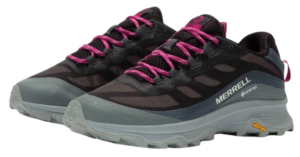
When shopping for shoes to house your new devices, always look for removable insoles. If the factory insole is glued down, you cannot put an orthotic on top of it without crushing your foot.
- For the Job Site: Look for deep, lace-up safety boots with strong shanks. Read our guide to occupation-specific orthotics.
- For the Gym/Running: Look for neutral or stability runners with deep heel counters. Check out our advice on custom orthotics for runners.
- For the Winter: Alberta winters demand specific footwear. See our recommendations for orthotic-friendly winter boots.
- For Everyday: We carry a wide selection of supportive, orthotic-friendly footwear right in our clinic. Browse our brands page to see what we recommend.
Don’t Let Your Orthotics Insurance Coverage And Benefits Expire
If your benefits run on a standard calendar year (January to December), they do not roll over. If you have $500 sitting in your account on December 31st, it vanishes on January 1st.
Every single November, clinics across Edmonton are swamped with patients frantically trying to use their benefits before the deadline. Because custom orthotics require a physical appointment, casting, and lab manufacturing time, you cannot wait until the last week of December.
Your Action Plan for Pain-Free Feet:
- Check Your App: Verify your dollar limits and frequency right now. Determine if you have enough coverage (or an HSA) to execute the two-pair strategy.
- Call Your Doctor: Request a specific prescription detailing your diagnosis and the need for custom orthotics (and specify two pairs for different activities if possible!).
- Book Your Assessment: Contact us today to secure your spot.
Investing in custom orthotics—especially a dedicated pair for work and a dedicated pair for play—is an investment in your energy, your career longevity, and your quality of life. Stop putting up with foot pain, and stop the daily hassle of swapping your insoles. Leverage your Alberta health benefits today and build the foundation your body deserves!