When you experience chronic foot, knee, or lower back pain, it is easy to blame your age, your job, or your workout routine. However, the true culprit is often hiding in plain sight: the way your foot naturally strikes the ground.
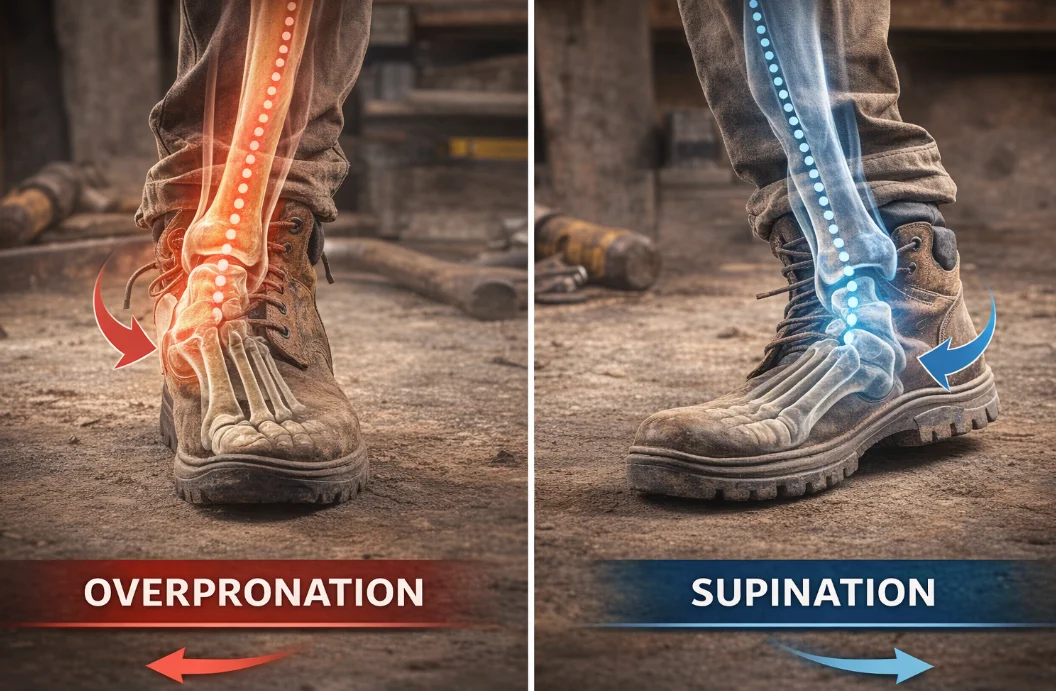
Every time you take a step, your foot undergoes a complex mechanical process to absorb shock and propel you forward. This movement is called pronation. While pronation is a normal and necessary function of the human body, many people have biomechanical imbalances that cause them to roll their feet too far inward (overpronation) or not enough (supination).
Understanding the battle of overpronation vs supination is the first step toward resolving mysterious aches and pains. In this comprehensive guide, we will break down the biomechanics of your foot strike, how these gait abnormalities trigger a chain reaction of pain throughout your body, and how specialized footwear and custom orthotics can correct your stride.
What is Normal Pronation?
Before we dive into what goes wrong, it is essential to understand what is supposed to happen when you walk or run.
“Pronation” refers to the natural side-to-side movement of your foot as you walk or run. In a normal, healthy gait cycle:
- Your heel strikes the ground slightly on the outside edge.
- As your weight shifts forward onto the rest of your foot, your arch naturally flattens and rolls inward (about 15 percent).
- This inward rolling motion is your body’s built-in shock-absorption mechanism. It safely distributes the impact forces of walking or running.
- Finally, as you prepare to push off for your next step, your foot rolls slightly back outward, becoming a rigid lever to propel you forward evenly off the ball of your foot.
When this system works perfectly, the impact of your body weight is distributed evenly, minimizing the strain on your joints, tendons, and ligaments. But what happens when the system is flawed?
What is Overpronation? (The “Flat Foot” Strike)
Overpronation occurs when the foot rolls inward more than the ideal 15 percent after the heel strikes the ground. Instead of the arch stabilizing, it continues to collapse, transferring your body weight to the inner edge of your foot and your big toe.
If you overpronate, your foot and ankle have trouble stabilizing the body, and shock isn’t absorbed efficiently. The big toe and second toe end up doing all the work during the “push-off” phase of your step, which puts immense strain on these smaller structures.
The Connection to Flat Feet
Overpronation is heavily linked to having flat feet, medically known as pes planus. While some people are born with naturally low arches, others develop “fallen arches” over time due to age, weight gain, or demanding jobs that require standing on concrete all day. You can learn more about the specific causes and treatments in our detailed guide on pes planus.
Common Injuries Caused by Overpronation
Because the foot lacks a stable foundation, the internal structures overwork themselves to compensate. Overpronators frequently suffer from:
- Plantar Fasciitis: The excessive flattening of the arch severely strains the plantar fascia (the thick band of tissue under the foot), leading to sharp heel pain.
- Shin Splints (Medial Tibial Stress Syndrome): The inward rolling of the foot twists the tibia (shinbone), causing the surrounding muscles to tear away from the bone.
- Bunions and Hammertoes: Pushing off forcefully from the inner edge of the foot places abnormal pressure on the big toe joint, accelerating the formation of bunions.
- Achilles Tendonitis: The Achilles tendon is forced to work at an unnatural angle, leading to micro-tears and inflammation.
The Shoe Wear Pattern of an Overpronator
Grab a pair of your well-worn running or walking shoes and look at the soles. If you overpronate, you will notice significant wear and tear on the inside edge of the heel and under the ball of the foot, specifically near the big toe. Furthermore, if you place the shoes on a flat table and look at them from behind, the shoes may visibly tilt inward.
What is Supination? (The “High Arch” Strike)
Supination (often referred to in the running community as “underpronation”) is the exact opposite of overpronation. In this gait cycle, the foot does not roll inward enough after the heel strikes the ground.
Instead of flattening out to absorb shock, the foot remains rigid, and your body weight stays concentrated on the outside edge of your foot. During the push-off phase, the work is handled entirely by the smaller toes on the outside of your foot.
The Connection to High Arches
Supination is most commonly associated with a high, rigid arch, medically known as pes cavus. Because the arch sits so high, it does not drop down to absorb the impact of the ground. The foot acts less like a shock-absorbing spring and more like a stiff block of wood. For strategies on managing the pain associated with rigid, high arches, read our 7 steps to comfort with pes cavus.
Common Injuries Caused by Supination
Because supinators lack natural shock absorption, the impact forces of walking and running travel harshly up the legs. Common ailments include:
- Ankle Sprains: Because the weight is constantly balanced on the outer edge of the foot, supinators are highly susceptible to rolling or twisting their ankles.
- Stress Fractures: The smaller bones on the outside of the foot (the metatarsals) and the fibula (the smaller lower leg bone) absorb a disproportionate amount of impact, leading to hairline fractures.
- Iliotibial (IT) Band Syndrome: The harsh impact travels up the outside of the leg, causing the IT band (which runs from the hip to the knee) to become tight, inflamed, and painful.
- Calluses and Corns: Supinators frequently develop thick, painful calluses on the outer edge of the heel and the little toe due to excessive pressure and friction.
The Shoe Wear Pattern of a Supinator
Check the soles of your shoes. If you supinate, the wear pattern will be concentrated heavily on the outside edge of the entire shoe, from the heel all the way up to the pinky toe. When placed on a flat surface, the shoes may tilt outward.
The Kinetic Chain: How Foot Strike Affects the Rest of Your Body
It is vital to understand that the battle of overpronation vs supination does not just affect your feet. The human body is a kinetic chain—a series of interconnected joints and muscles.
Think of your body like a house, and your feet as the foundation. If the foundation is tilted, the walls will lean, the doorframes will warp, and the roof will sag.
- When you overpronate: Your foot rolls inward, which causes your tibia (lower leg) and femur (upper leg) to rotate inward as well. This internal rotation knocks your knees out of their natural alignment and tilts your pelvis forward, putting intense strain on the lumbar spine (lower back).
- When you supinate: Your foot stays rigid on the outside edge, which bows the legs slightly outward. The lack of shock absorption means that the knees and hips are forced to absorb the heavy impact of your footsteps, leading to rapid joint wear and tear.
If you are dealing with chronic pain that seems to have no obvious cause, your feet may be the silent trigger. We explore this interconnected relationship deeply in our article: 5 Signs Your Feet Are Messing Up Your Knees, Hips, or Back.
How to Tell if You Overpronate or Supinate
While chronic pain and shoe wear patterns are excellent clues, you can perform a simple at-home test to get a better idea of your arch type and foot strike.
The Wet Footprint Test
- Fill a shallow pan with water and place a piece of heavy, dark paper (like a brown paper grocery bag) or a piece of cardboard on the floor nearby.
- Step into the water with bare feet, ensuring the entire bottom of your foot is wet.
- Step onto the paper or cardboard with your normal, full body weight, then carefully step off.
- Examine the footprint left behind.
The Results:
- Normal Pronation: You will see the heel, the ball of the foot, and a band connecting the two that is roughly half the width of your foot.
- Overpronation (Flat Foot): You will see almost your entire footprint. The arch is completely filled in, indicating that the foot collapses flat against the ground.
- Supination (High Arch): You will see the heel and the ball of the foot, but the band connecting them will be extremely thin, or there may be no connection at all. This shows that the arch does not touch the ground.
Note: While the wet test is helpful, it only shows your foot while standing still (static). It does not perfectly replicate how your foot moves while walking or running (dynamic gait).
Choosing the Right Footwear for Your Gait
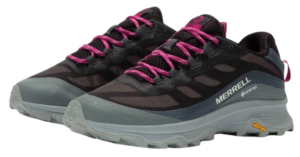
Shoe manufacturers engineer their athletic and walking shoes specifically to address overpronation vs supination. Wearing the wrong type of shoe can actually make your biomechanical issues worse. Organizations like the American Podiatric Medical Association (APMA) stress the importance of matching your shoe structure to your specific foot type.
Shoes for Overpronators
If your feet roll inward, you need shoes that restrict that excessive motion.
- Look for: “Stability” or “Motion Control” shoes.
- Features: These shoes feature a firmer foam on the inside (medial) edge of the midsole (often called a medial post). This firm structure acts like a wall, preventing the arch from collapsing inward. They also have stiffer heel counters to hold the ankle straight.
- If you are an active runner dealing with flat feet, read our specialized guide on custom orthotics for runners.
Shoes for Supinators
If your feet are rigid and roll outward, you do not need motion control—you need shock absorption.
- Look for: “Neutral” or “Cushioned” shoes.
- Features: These shoes have no medial posting. Instead, they are built with thick, plush midsoles designed to absorb the heavy impact that your high arches cannot absorb on their own. They also tend to be more flexible, encouraging the foot to move more naturally.
Major athletic brands like Brooks Running or ASICS offer excellent “Shoe Finder” quizzes that categorize their footwear explicitly by pronation level.
How Custom Orthotics Correct Your Gait
While buying the right shoes is a great start, a shoe alone is mass-produced for millions of people. It cannot correct the specific biomechanical nuances of your individual foot. This is where custom orthotics change the game.
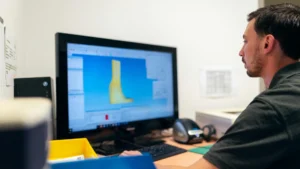
Unlike soft, gel insoles from the pharmacy (which only provide temporary cushioning and zero structural correction), custom orthotics are prescribed medical devices. They are engineered from a 3D mold or scan of your foot to perfectly match your arch contours and explicitly correct your gait abnormalities.
Fixing Overpronation with Orthotics
For overpronators, a custom orthotic acts as a supportive cradle.
- Arch Support: It provides a strong, unyielding arch profile that prevents the foot from collapsing inward during the weight-bearing phase of your step.
- Medial Posting: Orthotists can add a small, angled wedge (a “post”) to the inside of the heel or forefoot of the orthotic. This wedge subtly tilts the foot outward, physically stopping the overpronation and aligning the ankle, knee, and hip into a straight, healthy line.
Fixing Supination with Orthotics
For supinators, the goal is not to prop up an arch (since the arch is already too high), but to redistribute weight and absorb shock.
- Total Contact: A rigid, high-arched foot often only bears weight on the heel and the ball of the foot. A custom orthotic is molded to follow the high arch precisely, creating “total contact” with the bottom of the foot. This distributes your body weight over a much larger surface area, instantly reducing pressure hotspots on the outside edge.
- Lateral Posting & Cushioning: A slight wedge can be placed on the outside (lateral) edge of the orthotic to prevent the foot from rolling too far outward. Deep, shock-absorbing top covers are also added to replace the natural cushioning the high arch lacks.
Overpronation vs Supination Conclusion
Whether you are a marathon runner struggling with shin splints, or a retail worker dealing with aching knees at the end of a shift, understanding the mechanics of overpronation vs supination is the key to finding permanent relief.
You do not have to let your natural foot strike dictate your quality of life. By combining the proper supportive footwear with precision-crafted custom orthotics, you can realign your kinetic chain, absorb harmful impact forces, and return to moving comfortably and confidently.
Ready to find out exactly what your feet are doing when you walk? The best way to diagnose your gait is through a professional biomechanical assessment. Contact us today to schedule an appointment. We will analyze your stride, identify the root cause of your pain, and build a custom solution designed exclusively for you.