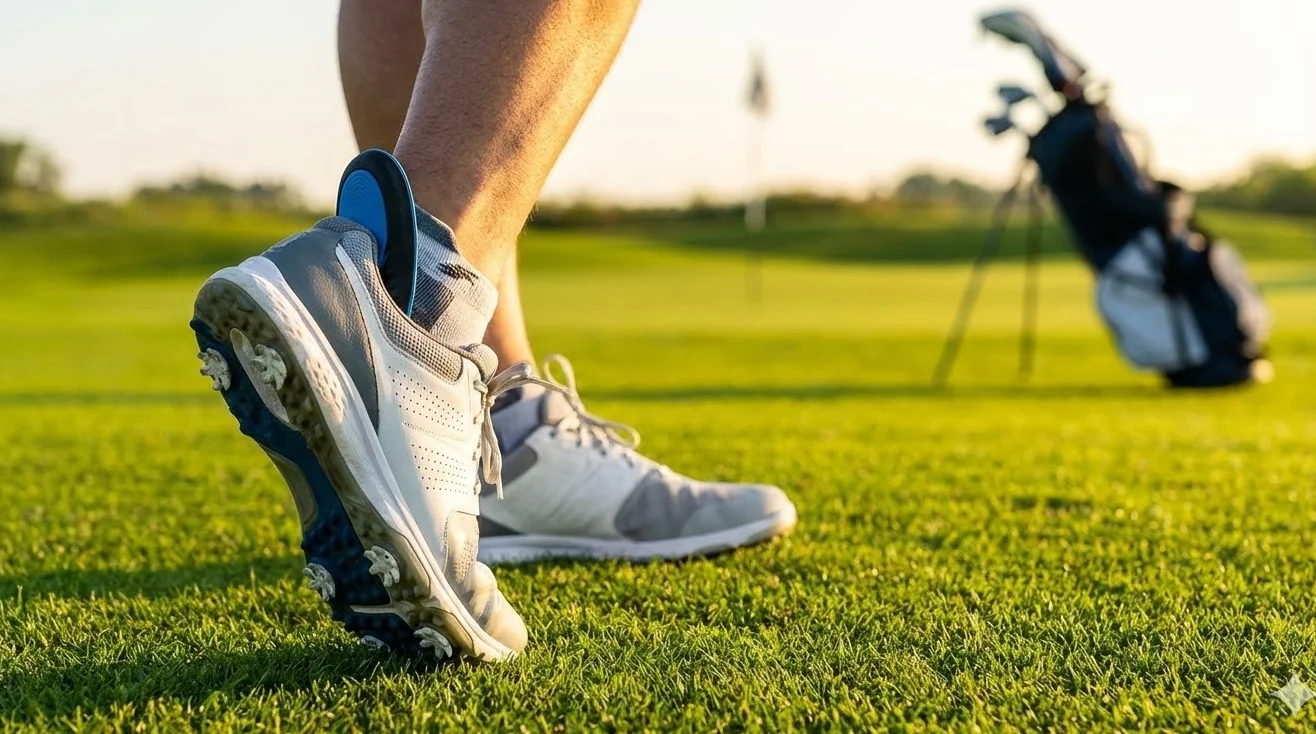
How Custom Orthotics for Golf Improve Your Swing

custom orthotics for golf - golfers feet

As the snow finally clears from the fairways here in Edmonton and the local courses prepare to open their doors for the spring season, golfers across the city are dusting off their clubs. Many will head straight to the driving range to work on their grip, their backswing, or their posture. They will obsess over launch angles, swing speed, and expensive new drivers.

However, in the relentless pursuit of lower scores, the vast majority of amateur golfers completely ignore the single most important element of a powerful, consistent swing: their connection to the ground.

Golf is a ground-up sport. Every ounce of power you generate is drawn from the earth, traveling up through your feet, legs, hips, and torso before finally reaching the clubhead. If your foundation is unstable, misaligned, or in pain, your performance will inevitably suffer. That is why investing in custom orthotics for golf is not just about walking 18 holes comfortably; it is a critical component of your athletic performance.

Here is our comprehensive guide to the biomechanics of the golf swing, the toll the game takes on your body, and how correcting your foot alignment can transform your time on the links.

1. The Biomechanics of the Golf Swing: Ground Reaction Forces

To understand why foot alignment matters, we must first look at the mechanics of the golf swing through the lens of physics. Golf instructors frequently talk about “Ground Reaction Forces.” When you push down into the ground during your swing, the ground pushes back up with equal force. This is where your power comes from.

Let’s break down the swing into phases and examine what your feet are doing:

  • The Setup: At address, your weight should be distributed evenly between your right and left foot, and balanced perfectly between the balls of your feet and your heels. If you have uncorrected flat feet, this balance is compromised immediately, throwing off your posture before you even swing.
  • The Backswing: As you initiate the backswing, your weight shifts toward your trail foot. The inside of this foot must act as a solid, immovable wall. If your foot overpronates (rolls inward) due to a lack of arch support, your knee will bow, your hips will slide laterally, and you will lose the coiled tension required to generate clubhead speed.
  • The Downswing: This is a violent, rapid transfer of weight from the trail foot to the lead foot. As your hips clear, your lead foot must aggressively grip the ground and stabilize your entire body weight. If this foot is unsupported, you will spin out of the shot, leading to sliced drives.
  • The Follow-Through: In the final phase, almost 100% of your weight is transferred to the outside edge of your lead foot. This requires a highly stable shoe and a supportive foundation to prevent ankle sprains.

2. The Kinetic Chain: Why Your Lower Back Aches After 18 Holes

Golf has a notorious reputation for causing lower back pain. Many golfers assume this is simply due to the rotational nature of the swing. While rotation plays a role, the root cause is frequently found much lower down the kinetic chain.

Your body is an interconnected system of joints. When your feet lack proper arch support, they overpronate during the walking and swinging phases of the game. When the foot rolls inward, the shin bone rotates internally, placing abnormal torque on the knee joint. The knee, trying to protect itself, alters the alignment of the thigh bone, which subsequently tilts your pelvis forward.

By the time this chain reaction reaches your spine, your lower back is absorbing massive stress. If you find yourself popping anti-inflammatories at the turn, your feet might be the actual culprit. Discover more about the Foot-Knee-Back connection and look out for the 5 signs your feet are messing up your knees, hips, or back.

3. The Physical Toll of Walking the Course

A standard 18-hole golf course requires walking anywhere from 8 to 10 kilometers. Walking this distance on uneven terrain, while carrying or pushing a heavy bag, is an athletic endurance event.

When your feet are not properly aligned, this repetitive walking leads to severe fatigue. As the muscles in your lower legs tire around the 14th hole, your golf swing mechanics inevitably break down. You become “lazy” with your footwork, leading to fat shots and topped balls.

This is where the concept of the “Walking Economy” comes into play. When your shoes and insoles are designed to support your natural biomechanics, your muscles don’t have to work as hard to keep you upright. Read more about how this works in our guide on how energy efficient walking footwear boosts energy.

4. Common Foot Ailments That Ruin Your Round

If you ignore your foot health, the golf course will eventually expose your weaknesses. Here are three common ailments that specifically plague golfers:

  • Plantar Fasciitis: If you feel a sharp, stabbing pain in your heel the morning after a round, you likely have Plantar Fasciitis. Walking 10 kilometers in unsupportive shoes strains the plantar fascia ligament. Review our top footwear steps for Plantar Fasciitis relief and learn more about morning heel pain.
  • Metatarsalgia (Ball of Foot Pain): During the follow-through, the trail foot pivots aggressively onto the toes, placing immense pressure on the ball of the foot. This repetitive pivoting can cause severe burning pain. Check out our key steps to improve footwear for Metatarsalgia comfort.
  • Achilles Tendonitis: Many Edmonton golf courses feature dramatic elevation changes. Walking up steep inclines stretches the Achilles tendon under heavy load, leading to micro-tears. Protect yourself by understanding Achilles tendonitis.

5. The Solution: Why You Need Custom Orthotics for Golf

So, how do you lock in your foundation, prevent injury, and improve your ball striking? The answer lies inside your shoes. Even top-tier, $250 golf shoes come with generic, flat factory insoles that are designed for the “average” foot.

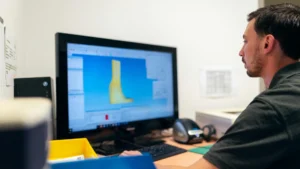
This is exactly where custom orthotics for golf become a game-changer. They are precision-crafted medical devices designed from a 3D mold of your specific foot structure. If you are debating between drugstore inserts and professional support, read our breakdown on custom orthotics vs off-the-shelf insoles.

How Custom Orthotics for Golf Improve Your Game:

  • Eliminating Sway: By supporting the medial arch of the trail foot, orthotics prevent overpronation during the backswing, allowing you to store rotational energy.
  • Improving Balance: Orthotics ensure complete contact between the sole of your foot and the shoe, giving your brain better proprioceptive feedback at address.
  • Preventing Late-Round Fatigue: By taking the strain off your ligaments, custom orthotics for golf keep your legs fresh through the back nine.
  • Pain Reduction: They stop the kinetic chain reaction that causes lower back and knee pain.

Curious about the manufacturing process behind athletic inserts? Read up on how your custom orthotics are made.

6. How to Choose the Perfect Golf Shoe

A pair of custom orthotics for golf is only as good as the shoe they sit inside. When shopping for footwear this season, keep these structural requirements in mind:

  • Torsional Rigidity: Grab the toe and the heel of the golf shoe and try to twist it in opposite directions. A good golf shoe should be stiff and resist twisting to support the rotational forces of your swing.
  • Firm Heel Counter: Press on the back of the heel cup. It must be rock solid to lock your heel into place and prevent slipping.
  • Spiked vs. Spikeless: While spikeless shoes are comfortable, traditional spiked shoes offer superior traction in wet, dewy morning conditions.
  • Removable Insoles: Ensure the shoe has a removable factory insole so you have enough depth to accommodate your new custom inserts.

7. Pre-Season Preparation and Fitting

The worst thing you can do is buy a new pair of golf shoes, insert brand new custom orthotics for golf, and head straight to the first tee.

Your body needs time to adjust to corrected biomechanical alignment. Follow a strict break-in protocol: wear them around the house for an hour a day, then to the grocery store, and finally to the driving range before you attempt to walk 18 holes. If you are ready to get started, learn exactly what happens during a custom orthotics fitting.


Custom Orthotics for Golf Conclusion

Golf is a difficult enough game without fighting your own body. If you are struggling with inconsistent ball striking, swaying off the ball, or suffering through knee and lower back pain after every round, it is time to look at your foundation. Proper foot alignment is the secret weapon that can lower your handicap and keep you walking the fairways of Edmonton comfortably all summer long.

Investing in custom orthotics for golf does more than just cushion your step; it actively corrects your biomechanics, stops the kinetic pain cycle, and provides the rock-solid stability you need to generate true swing power.

Don’t let fatigue and joint pain ruin your scorecard this year. Discover the difference professional support makes.

Would you like me to write a quick, punchy email newsletter using this newly optimized content to send to your patient list to kick off the spring golf season?

More Posts

How Pregnancy Changes Your Feet

How Pregnancy Changes Your Feet

Pregnancy is a time of profound transformation. As you prepare to welcome a new member to your family, your body undergoes a series of incredible, complex changes to accommodate growing

Send Us A Message