
Finding dress shoes for orthotics often starts with a familiar frustration: your walking shoes work well, but the polished pair for a meeting or wedding feels cramped as soon as the inserts go in.
You do not have to choose between buying something immediately and giving up on the occasion. Start with the shoes, the actual orthotics and a clear account of what you need the combination to do. A fitting conversation is more useful than another online search for a universally perfect brand.
At Custom Orthopedic & The Walk Shoppe in Edmonton, we focus on understanding footwear choices. This guide explains how to prepare, compare styles and identify the questions to discuss before relying on a new pair for work or an event.
Can You Wear Custom Orthotics in Dress Shoes?
Sometimes, yes, but the specific device and shoe need to work together. Dress footwear often has less internal room than a walking shoe, and a full-length insert may not transfer successfully.
The Pedorthic Association of Canada’s dress-shoe guidance explains that providers can consider thinner, narrower or shorter designs where appropriate. That is an assessment decision, not an instruction to cut down your current orthotics.
Bring the pair you hope to wear and ask whether your existing devices can be used. If they cannot, discuss the alternatives before deciding on different footwear or additional orthotics. Our custom orthotics service information introduces the assessment process.
A useful outcome may be finding a different shoe rather than ordering another device. Keep both possibilities open until someone has checked the actual fit.
Define the Occasion Before You Choose the Style
Dress shoes for an occasional dinner have a different job from footwear worn throughout a working week. Describe the whole day, including travel, walking between buildings and time spent standing.
For a wedding, consider arrival, photographs, the ceremony and the reception separately. For work, explain whether you mostly sit, regularly present on your feet or move between offices. These details give your fitter a realistic brief.
Write down any dress-code requirements. Does the shoe need a particular colour, a closed toe or a certain appearance? Distinguish a firm requirement from a preference so the discussion has room for alternatives.
If the event is approaching, arrange the fitting early enough to raise questions and practise using the setup. The morning of an important occasion is an awkward time to discover that a shoe feels different when you walk.

Check Shape, Width and Depth Separately
A shoe can have enough space in front of the toes while still pressing down from above or squeezing at the sides. Explain which area feels tight instead of asking only for the next size.
Our wide versus extra-depth footwear guide explains why these are separate dimensions. Ask to compare another width or model when the length appears appropriate but the overall fit is wrong.
Try both shoes with the intended socks or hosiery and your actual orthotics. Stand and walk rather than deciding only from a seated fitting. If one foot feels different, tell the fitter before committing to the pair.
The American Academy of Orthopaedic Surgeons’ shoe-fitting guidance recommends selecting footwear by fit and allowing appropriate toe space. A familiar size label should be a starting point, not the final decision.
Look at the Liner and How the Orthotic Sits
Ask whether the original liner can be removed and which layers are intended to remain. A removable liner is useful, but it does not automatically establish that every orthotic will fit.
Have the fitter demonstrate placement, then try it yourself. Notice whether you can reproduce the arrangement without pushing, folding or lifting the device. Keep any removable original liners together so you know which pair they belong to.
Guy’s and St Thomas’ NHS footwear advice emphasizes adequate depth when accommodating insoles. Ask for the fit to be checked with your foot inside, including space above the toes and around the heel.
If the shoe looks correct until the insert is added, describe that change precisely. It helps separate a shoe-space question from a question about the suitability of the device itself.
Compare Dress Styles Without Relying on Labels
Lace-Up Dress Shoes
Adjustable laces give you something concrete to compare during a fitting. Check whether you can secure the pair comfortably with your orthotics inside. A formal appearance alone does not tell you how much usable space is available.
Strap-Fastened Shoes
A strap may be worth trying if you prefer a different appearance or find laces inconvenient. Practise fastening it yourself and explain any pressure, heel movement or difficulty reaching the closure.
Loafers and Slip-On Styles
Bring the exact pair rather than assuming all loafers behave similarly. Ask the fitter to assess how the shoe stays on once the orthotic is inserted. Discuss whether another fastening would make the arrangement easier to use.
Dress Boots
Try the boots with the socks you intend to wear and check the complete fit. A larger-looking boot does not necessarily have more useful interior space. Compare its opening, fastening and heel fit with other options.
Discuss Heel Height Before Transferring Devices
Do not assume an orthotic designed for one shoe can be moved into a substantially different heel height. Ask your provider to review the proposed footwear rather than experimenting at an event.
AAOS guidance favours roomier toe boxes and lower heels over narrow, high-heeled footwear. If you have a specific style in mind, bring it into the conversation and explain how long you expect to wear it.
For example, you might need one pair for a short presentation and another for the journey and the rest of the day. Treat that as a practical question to discuss, not a reason to tolerate a painful fit.
If you have been given individual footwear restrictions, follow those instructions. General shopping advice should not override a treatment plan or recommendations after surgery or injury.
When Bunions or Forefoot Pressure Affect the Choice
Tell the fitter exactly where the upper or seams touch a sensitive area. Pointing to the location is often more helpful than saying a shoe needs to feel softer overall.
The AAOS bunion guide recommends matching footwear to foot shape and avoiding shoes that feel too tight. Our shoe-fitting advice for bunions also provides questions about toe-box shape and pressure.
Do not assume new burning, tingling or forefoot pain is simply a footwear preference. Ask a clinician to assess unexplained symptoms. The AAOS information on Morton’s neuroma illustrates why forefoot symptoms can require a specific diagnosis.
A shop-floor comparison can help identify pressure from a particular shoe. It cannot establish the medical cause of every painful area.
Plan for the Commute and Edmonton Weather
The dress shoe is only one part of the day. Think about the route from home to the venue, parking, outdoor surfaces and where you can comfortably change footwear.
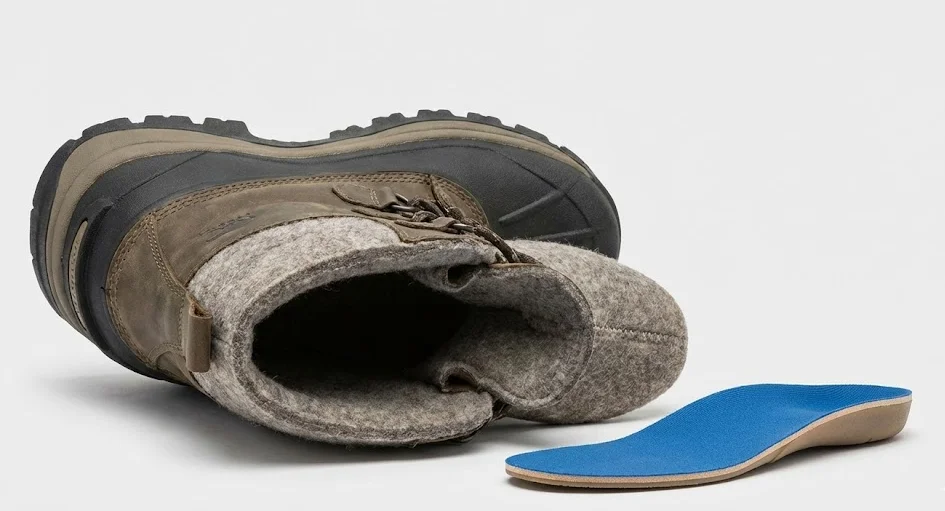
In winter, carrying an indoor pair may make more sense than relying on formal shoes for the entire journey. Ask how your orthotics should be handled if you change between pairs, and have both combinations assessed where appropriate.
MyHealth Alberta’s winter-walking guidance recommends well-fitting footwear with good grip and notes that ice cleats should be removed indoors. No dress-shoe fitting replaces attention to slippery conditions.
For the outdoor part of your routine, our orthotic-friendly winter-boot guide offers related reading. Plan where to store the unused pair and avoid rushing the change while carrying bags or balancing on stairs.
Trial the Complete Outfit Before the Important Day
Check the retailer’s return or exchange conditions before you purchase. Ask whether an indoor trial is permitted and retain the packaging until you understand the policy.
Try the shoes with the socks or hosiery, orthotics and clothing you expect to use. That is particularly helpful when trousers, a long dress or a mobility aid affect how easily you can put footwear on.
Use a short, ordinary trial when you can stop and change shoes. Notice the heel fit, toe room and fastening during walking. Record where any pressure appears and whether it changes with time.
Do not make the trial a contest in endurance. Contact the provider if the fit is uncomfortable or the orthotic does not remain positioned as demonstrated. Clear observations make a follow-up more productive than hoping the problem disappears.
Keep New Orthotics and New Shoes in Perspective
New devices may come with a gradual introduction schedule. Follow your provider’s instructions and discuss the timing if you need them for an upcoming occasion.
NHS information on foot insoles describes building up wear gradually. It does not mean a tight or painful dress shoe should be accepted as a necessary adjustment.
If your established devices no longer feel right in several familiar pairs, explain that wider pattern rather than focusing only on the new shoes. Our guide to orthotic adjustment and replacement can help prepare questions for a review.
Keep a record of which device you wore in which pair, especially when comparing alternatives. Changing several things at once can make it harder to describe what helped or caused difficulty.
What to Bring to a Dress-Shoe Fitting
Prepare the items you will actually use. Bring your current orthotics, usual hosiery and the dress shoes you already own, even if they have been unsuccessful. A comfortable everyday pair can provide a useful comparison.
- Explain the occasion, dress code and expected time on your feet.
- Show the fitter where pressure or heel movement occurs.
- Ask which original liner should remain in the shoe.
- Practise inserting the device and fastening both shoes.
- Confirm the trial, care and follow-up instructions before leaving.
If this is your first visit, read our pedorthist appointment guide. When you contact the shop, mention the event date so the conversation can account for your plans without assuming a particular turnaround time.
Save the Details of a Successful Fit
When a pair works, record the model, size, width and the orthotic used at the appointment. Keep the receipt and care instructions together. Those details give you a concrete starting point for another fitting without assuming every shoe from the same brand will behave identically.
If you return for an adjustment, bring the shoes as well as the devices. Explain what you were doing when the problem appeared and whether another pair felt different. A useful note might say that the heel lifted during walking while the forefoot remained comfortable, rather than simply describing the whole shoe as too big.
Keep the conversation specific. Good footwear decisions become easier when you can compare real examples, describe a clear purpose and ask what changed between one arrangement and the next.
Questions People Ask About Dress Shoes for Orthotics
Do I Need to Buy a Larger Size?
Not automatically. The issue may involve width, depth or shape rather than length. Have the proposed shoes checked with the devices in place and describe which area needs more space.
Can I Cut My Walking Orthotics to Fit?
Do not modify prescribed orthotics yourself. Ask the provider whether the shoe is compatible or whether a different design is appropriate. A shorter device, if indicated, should be a professional decision.
Does Every Formal Event Require New Orthotics?
No universal rule applies. Discuss how often you wear the shoes, the fit of your current devices and your individual treatment needs. An occasional event and daily work footwear deserve different conversations.
Are Dress Shoes Suitable for a Standing Job?
Bring the job requirements to the fitting. The Pedorthic Association of Canada’s workplace-footwear guidance highlights footwear structure and support for demanding work. Do not assume a style that suits a dinner also suits a full shift.
Choose Dress Footwear With Help in Edmonton
At Custom Orthopedic & The Walk Shoppe, we can assess the footwear and orthotics you bring and discuss alternatives that reflect your routine. Our footwear brands and fitting page introduces our approach without promising that every model suits every foot.
Visit 10536 102 Avenue NW, Edmonton, call 780-426-3338, or use our contact page to ask about a fitting. For the quieter hours after work, our indoor shoe guide explains another part of a practical footwear routine.
This article provides general footwear information and does not replace individualized medical advice. Seek healthcare advice for new or persistent symptoms, wounds or changes in walking.